Monday, June 16, 2014

The Holistic Gardener by Fiann Ó Nualláin - Book Review


Stagnant water could spread Weil’s disease


I got a small parcel delivered to me this week, which I always find exciting. Usually it’s something I ordered from Ebay and forgot about. This parcel was from Mercier Press based in Cork and contained a book they thought I might like to read called ‘The Holistic Gardener, First Aid for the Garden’, written by horticulturalist and broadcaster Fiann Ó Nualláin. 

Julian in my Pocket
I don’t really ‘do’ the book thing and all of my collection went to various groups years ago so the inclusion of this book has increased my collection to 1. When I was at horticultural college I had a tutor called Julian who was so knowledgeable about everything that I always wished I could keep him in my shirt pocket for him to be there permanently to get answers to my questions. My wish sort of came true a few years ago with the introduction of the smart phone. I can now get answers (usually hundreds of different ones) to most questions at the swipe of my screen and it’s got the added benefit of not having to feed it and I can switch it off when it gets annoying.

Flick Through
I thought the book looked interesting so took it along to Portstewart to have a flick through while I was waiting for my lad to come up from the Atlantic where he was doing some deep sea diving. As I had a few hours to wait I thought it would make good use of my time. I generally fall asleep in the car when I am waiting for someone so this made a pleasant change.  

In between naps I read more about what motivated the writer Fiann to write a book about natural first aid remedies in the garden and it seems that apart from having a lifetimes experience in garden related accidents, he saw that there was a need for a book that combined herbs, homemade remedy preparation and a garden plant reference all in one so when you run into the garden with a cut you don’t have to sift through endless reference books or drip blood onto the computer keyboard or phone as you put in keywords to find a relevant page on how to treat the injury.  

Comprehensive
After a few disclaimers and recommendations about seeking professional medical help if you get bitten by rats, Fiann convinces early on that gardens have remedies for most injuries from a scratches, heatstroke, chapped hands, heart attacks, pesticide poisoning to wasp stings. Miraculously all of these can be treated on site with the plants you grow. Fiann happily tells us that the plant beside you as your work or relax in the garden can be the answer to a hive, ache or watery eye and ingesting fruit and vegetables can also build up antihistamine levels as a defence against stings and bites. Plants including calendula, sage, geranium, dandelions and roses all have their healing virtues.

As the day progressed I found myself reading chapter after chapter of the book which I initially thought would just be for reference. If you are unlucky enough to get stung by a bee or wasp or have an army of midges following your every move then fear not, the answers lie in the plants you grow. There’s even a bit later on about after sun remedies and gardener’s knee complaint.

The more I read the chapters the more I realised just what a dangerous place the garden is, even stagnant water in a butt can give you Weil’s disease. I just couldn’t put the book down, even pruning a rose could be a dangerous business.                                                                                                                                                                                                                                                                                                                                                                                                                                                                                                                                                                                                                                                                                                                                                                                                                                                                                                        
Top Tips
The book has some lovely illustrations by Sam Chelton which breaks up the text and has some good top tips such as not to burst blisters. I needed to have that put in writing because that’s what I always say to people when I see them with the pins out of the sewing box. 

No Competition
I was going to give the book away in a competition, but I’m afraid this time it’s not going to be. I have decided to keep it. Partly because it’s the only book I have in my “collection”, but mainly because it’s a very good reference book if you need to remedy an accident in the garden.
I really enjoyed the read and it’s hopefully made me a bit more cautious in the garden. I hope by keeping it, I never have the need to refer to it again. It can be a constant reminder to take things slowly and carefully in the garden.

Fastest Selling
The Holistic Gardener is the fastest selling Irish Gardening book ever and can be bought either as hardback or Kindle. Fiann is currently co-presenting on RTE 1’s Dermot’s Secret Garden programme. Check out Fiann's blog theholisticgardener.com or send him a tweet @HolisticG especially if you have any more remedies, I can see a sequel coming on.

Sunday, June 15, 2014

Shrub Care


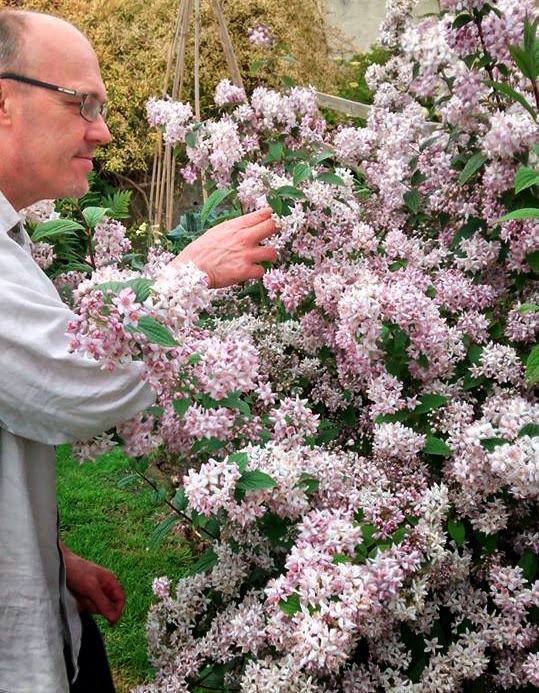
Having a good sniff of the early flowering Deutzia X hybrida 'Mont Rose’

We have a lovely flowering Deutzia X hybrida 'Mont Rose’ shrub in the garden. It has a slightly aromatic scent and attracts load of bees. It’s a stunning, colourful start to our shrub collection year and it’s the first time I’ve seen it in flower. 

The reason for this is that I have been a bit enthusiastic with my pruning since moving into the house three years ago. I didn’t let the shrub grow as that it has a tendency to hang over the fence and go into the neighbour’s garden. I am also limited for space on the bed it grows in and leaving it untended means less room for vegetable’s to be planted. This year I decided just to let it grow and I am really pleased I did.  The blooms are amazing.  

So how can I make sure that the shrub flowers as well next year and why should we prune shrubs?

Why prune shrubs?
Shrubs create the structure in a garden so it's important to keep them in good condition with regular pruning.  Regular pruning, usually after flowering along with mulching and feeding will help the shrubs to look good. Regular pruning will also help to keep the shrub in its allocated space and not take over the garden.

How and where to cut
Use sharp tools and make clean cuts without leaving snags. Cut close to buds, but not into them, and always above which will stop rotting.

Pruning young shrubs
  • Early pruning helps establish a shapely shrub with vigorous, balanced growth.
  • Most evergreen shrubs do not need thinning or formative pruning. However all shrubs benefit from shortening any excessively long shoots and cutting out weak or damaged growth.
  • Deciduous shrubs are more likely to need pruning into shape; this is known as ‘formative pruning’. Young shrubs often grow lots of shoots so you will have to thin them early on.
  • ‘Correct lopsided growth by lightly pruning longer shoots and hard pruning weak stems.
Rejuvenating old shrubs
Shrubs such as forsythia and buddlea can soon accumulate masses of old, dead wood in the centre if they are not pruned regularly. The best way to rejuvenate these plants is to cut them back during the dormant season. First cut out dead, diseased and crossing stems, and then thin the number of remaining stems by half.

Shrubs that respond to severe pruning, such as ribes, philadelphus and my Deutzia specimen may be cut almost to ground level to re-establish a framework of new shoots. If the shrub is old and it's hard to predict a successful revival, take cuttings just in case.

Pruning shrubs in pots
A lot of us have shrubs in pots. Once a container shrub reaches maturity it is usually best repotted annually in spring, or every other year, using the same or similar sized container. If you find the plant is very pot-bound, this is a good time to lightly prune the roots. Prune about one-third of the thicker non-fibrous roots back to the intact rootball, but avoid damaging the fibrous feeder roots. Repot in fresh compost and finish by pruning the top growth by about one-third to balance the root loss.

Coppicing and pollarding shrubs
Shrubs grown for their colourful stems or foliage, such as dogwood, need to be cut down every spring to 4-5 buds to encourage new growth. This is known as coppicing. If you want to keep a framework of older stems, cut down one-third of the stems.

A similar technique is called ‘pollarding’ where stems are cut back to the same point a single stem or framework of stems. After pruning, feed and mulch the plant.

Pruning shrubs in autumn
After a summer's vigorous growth, it is a good idea to give your shrubs a light prune in the autumn to keep them in shape. Once deciduous shrubs lose their leaves, it is easy to see the plants' overall shape and decide what needs to be cut back.

Pruning my Deutzia
In a week or so the flowers will have gone. It will be then that I can cut the shrub back and cut out the old flowering stems. I have some mulch to go around the base to help feed and keep in the moisture.
As the shrub will be contained and reduced dramatically in size, I will be able to plant annual vegetable crops around and underneath it, so it’s a win –win situation. I didn’t get one complaint from the neighbour either.

Thursday, June 5, 2014

Employing a Gardener


It’s been a busy few weeks here. Mainly because of my in-laws needing a bit of care. My mother in law was doing a spot of weeding in her front driveway when her husband accidentally ran over her toes as he reversed the car. This was painful enough but the shock of having her pinkies squashed caused her to turn around sharply to get out of the way, which in turn broke her leg. 

It gets worse. With her leg in plaster up to her thigh she needs to be moved around in a wheelchair. The chair was in the hallway and my father in law (like he did every evening for 50 years) made his way to bed by walking up the usually uncluttered hall. He fell over the chair resulting in a dislocated and broken shoulder. 

The main reason I mention this is that they are both avid gardeners and love to be active and as both are in their mid to late 80’s it’s certainly keeping them sprightly. They will both be laid up for 3 months at least which is right through the main growing season. To help them get through this I have sown a few veggies, but for a more reliable maintenance service we have brought in a gardener who was recommended by a neighbour and has worked for my in-laws on and off for years.

Reliability
There is a lot of grass to keep on top of and because I couldn’t offer any sort of reliability cutting it once a week we thought it would be a good idea to have him around regularly so nothing gets too out of hand. I think reliability is important when finding someone to tend the garden- weather permitting of course. There comes a time when most of us need gardening services for one reason or another, but why employ a gardener and how do we find them?

Why employ a professional gardener?
If your garden has got out of hand or like my in-laws you just can’t get out and keep on top of things then it’s probably time to get in the professionals. A professional gardener is someone who not only makes their living from supplying gardening services but is also fully insured, experienced, up to date with laws, has good tools and is aware of safety procedures especially if they have people working for them – and has an attention to detail and tidy.

Specialists
As with any profession gardening is skilled work and you might need to employ a specialist in one aspect of the garden like a tree care expert, it’s not very often you can find someone who can tackle everything in the garden.
Finding someone who works from their car with cheap tools and no means of removing rubbish isn’t a wise move as it might cost more to clean up after them than hiring a fully insured professional. It will be less stressful in the long run.

Finding a Gardener?
When I first started gardening I put a hand drawn advert into a local shop window. Because the poster was well made I got a good response from it. There are loads of other places to find tradespeople; here are just a few suggestions

  • Personal recommendation from family, friends or local business owners
  • Observing a gardener working in your local area and contacting them
  • Keeping an attractive flyer that was posted through your door
  • Looking through the Golden pages
  • Ask local businesses for recommendations
  • Perusing adverts in local papers, directories and parish magazines
  • Going online and typing in local keywords

Gardening is a messy business and so people working in this profession can be dirty especially at the end of a long rainy day. Despite this you can usually get a valid impression of the way they run their business just by looking and talking to them. Appropriate work clothes can portray a good image.
Talking to prospective gardeners is a reliable way of helping you come to a decision on whether to hire them or not. Things we would be looking for are friendliness, politeness, confidence, willingness to converse and interest in their chosen profession. Keeping things local helps the local economy, is good for the environment and keeps costs down.

How much will it cost?
According to whatprice.co.uk gardeners will charge anywhere from €15 to €35 an hour depending on their level of qualification, and what the job involves. However larger gardens, more demanding tasks and specialist skilled work could cost more.

Thursday, May 22, 2014

The Tunnel is Overflowing


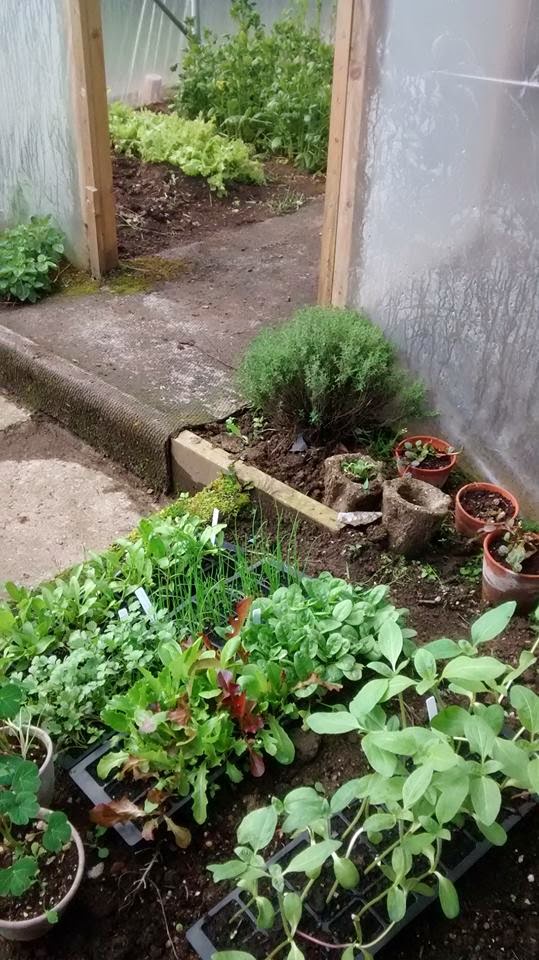
The polythene tunnel is overflowing, so much so that I have had to put a lot of trays outside. I’m not complaining of course as it’s a sure sign that everything is at full speed growing and germinating. The multi cell trays I have outside have mostly small plants that will be ready to plant into the vegetable patch as soon as I am confident there will be no more frosts, (apparently we don’t get frosts after the 8th of May according to the bloke who owned Ness Nursery). 

The runner beans especially are large enough and are rooting into the ground almost immediately wherever I put them. I have all of the bamboo structures in place so it won’t be any bother to get them out of the confines of the cells and into the ground. (Job to do number 200 in the garden) I need to just go over the soil where the other plugs are going to be planted; I’m not too fussy about weeds in the garden as long as the vegetables get a head start to cut down on the competition for nutrients in the soil.

I have new spinach and lettuce coming along in trays. I have some of these growing in the tunnel, along with peas and chard from last year and they have been great at supplying me with fresh greens to put into my blender in the mornings. There needn’t be any time in the year when the tunnel isn’t producing something to make into a blended drink, but the plants are starting to go to seed so I have cleared half of them to make way for fresh summer stock. I thought I might as well collect some of the seeds myself and plant them later in the year for another winter crop. I also have left one land cress plant in as I quite liked those blended too and I have self-set rocket but that’s a bit strong for the blender. The chard will probably all go as I have new plants coming along in the garden, they are from the same batch as the tunnel ones but because they have had to endure the rigours of winter out of doors they show no sign of going to seed just yet like the tunnel grown ones do.

I’ve added a lot of garden compost to the soil in the tunnel. It’s full of worms and a bit smelly but it’s needed to keep the nutrients up for the next batch of plants. I am finding bits of plastic bags, bread bag ties and other non-compostable things as I add the compost. I think this is an indication of putting things in the compost bin in bad weather and not looking or it could be a sign of not concentrating on what I am doing when I’m in the kitchen. 

This is probably the reason we find car keys in the fridge and shoes in the oven, everyone does that …right?

Self Set
I found a lot of self-set tomatoes in the patch where the spinach grew.  When the tomatoes finished in winter I just dug the soil and any dropped fruit was just covered over. For once my untidiness paid off as lots of new plants have emerged. I am growing a few on, but not many though as we weren’t that fussed about the variety we grew last year. I have some of Klaus’s ‘Sweet Aperitif’ type so they will be my main crop this year. Still it’s nice to get some freebies.
My trays of 60 cacti and succulents have been transferred from the windowsill in the porch and into the tunnel.  Overwintering them in the house paid dividends as they are, or were, looking very healthy. Since they have been in the tunnel their appearance has gone downhill a bit as the leaves are discolouring and some are looking a bit shabby. I should be pleased though as this is what the plants would look like if they were growing in the wild and not in a controlled environment. It’s like reverting them back to their original state. I was hoping to sell them on in garden centre quality but it looks like I’m stuck with them now. It’ll be a challenge finding somewhere in the house for them in winter as they will be in 60 individual pots by then!

Chamomile
My chamomile lawn plants came this week, bare rooted in a plastic bag. They looked great as I planted them into individual pots but are needed a bit of TLC to rejuvenate them so I have them under plastic in the tunnel for a week or two. I’m not sure what to do with them yet, maybe I’ll make a lawn.  I’ll add it to the list of jobs to do in the garden (number 276)

More stories

Related Posts with Thumbnails