Saturday, March 12, 2011
Communities and Beyond
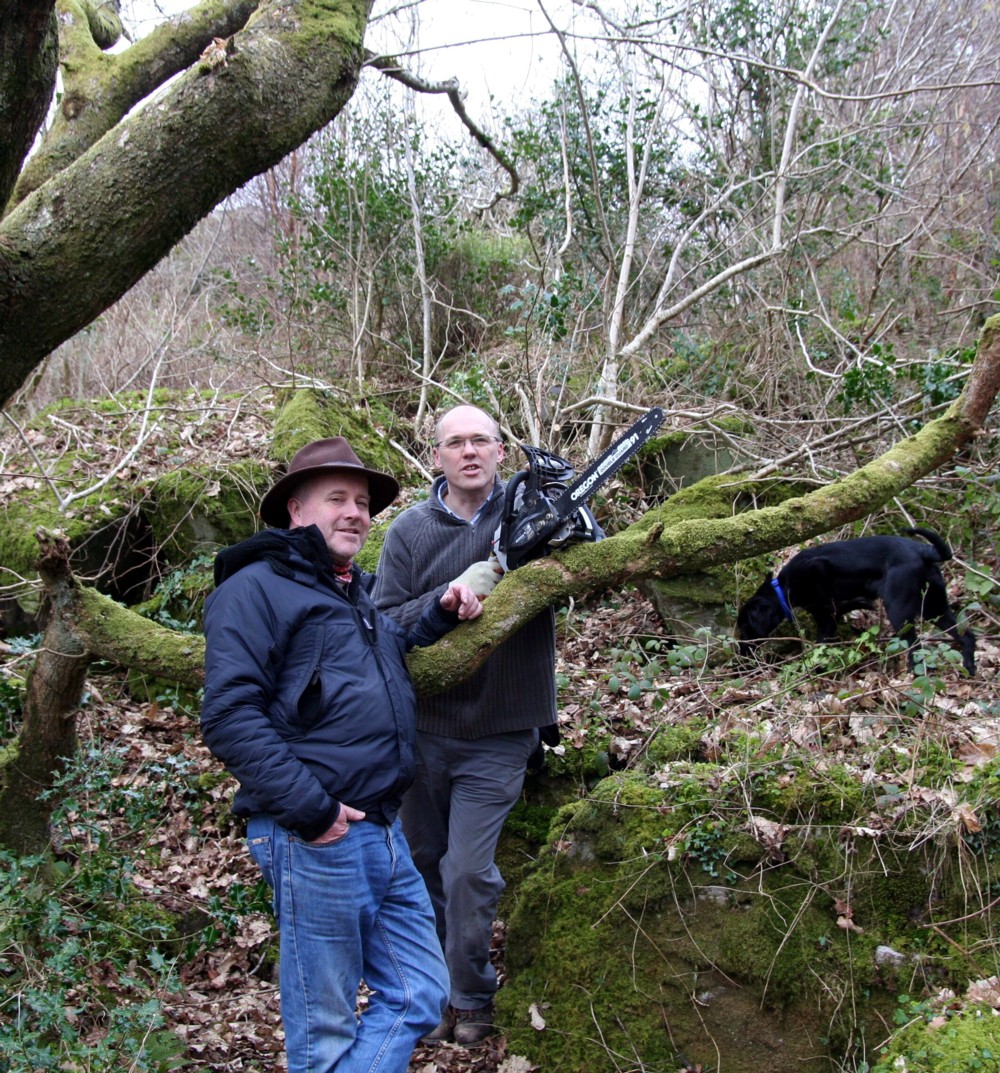
It’s been a while since Paul ‘The Mulcher’ Blaker from Nottingham paid us a visit. He’s over now though and in between walking our dog around town with a piece of blue rope tied to its collar and making friends with people in Rodden’s bar, he’s helping me to collect some hazel rods from the wood. In the past Paul has come over in his car, which freed him up to bring over his trusty machete to hack through the undergrowth. As he flew over this year he is a bit restricted with what he can put on the plane and machetes are probably quite high on the list of no-no’s up with small hand guns, gloopy liquids and jars of white powder.
So here we are in the woods. I have blown the dust off of the chainsaw and we are starting to saw through a few small upright stems. The chainsaw blade is blunt though and only scorches the wood instead of cutting through it like butter (a phrase often used in lumberjacking apparently)- I’ll have to make a trip to the Co-Op for a new blade later, but in the mean time it’s back to basics with the bow saw and a pair of loppers. We are cutting hazel rods for the peas and beans and the handtools are ideal. The hazel we have in the wood were probably planted as ‘Pioneer species’ as they would have offered protection for the native oak trees that are also growing. The oaks live a lot longer and would thrive in the protected environment. Hazel was planted mainly for basket making, wattle hurdles for fencing, broomstick handles and shelter for livestock as well as for oak shelter.
In no time at all Paul and I have enough poles for the vegetable plot. It doesn’t take long to make a big hole in the canopy of dense woodland; letting in the light and allowing the under storey a chance to grow increasing the grasses and air flow. Paul thinks we might even get Black Caps and Nightingales coming for a visit to feast on the increased numbers of insect. Cowslips and primroses could grow happily with the bluebells.
It’s great to be working with someone in the woods. There’s the health and safety issue for a start, especially when using a chainsaw. The dogs are company but not exactly Lassie when it comes to raising the alarm if anything went wrong. They would probably try to go through my pockets for biscuits if I fell on the ground. The other reason for working together is the company, having the craic and gleaning new snippets of knowledge. I start to tell Paul about all the local initiatives there are in Inishowen to help get people growing their own. With the recession, rising fuel costs (that’s another reason for chopping the wood) and the new GM crops that are coming our way agreed by the outgoing Minister for Agriculture when the news was busy with the election campaign, there’s never been a better time to get together and grow.
Let’s see what’s happening locally (apologies if I missed any group out, have a rant on my blog if you like)
Moville Community Garden
Councillor Martin Farren turned the first sod last year in the Moville Community Garden. Community chef Brian McDermott set up the scheme on land between St Finian’s Park, O’Gara Villas and Foyleview housing estates in the town. It now has 23 raised beds and counting.
Amma
The GreenFriends community garden projects, which started near Enniskeane, Co. Cork for unemployed people, is part of an international movement to teach people to become more self-sufficient. A spin off of this is ‘GetGrowing’. Locally Get Growing kicked off at the Amma Centre in Clonmany recently with a Teacher Training course with 20 enthusiastic participants. The idea is to have a group of trainers who can set up small groups of budding gardeners in their own areas. The participants from these groups will visit each other’s gardens and help set up their vegetable plots. By working this way every member will have their own vegetable patch and a shared knowledge of how to grow successfully and know that there are people on hand to help with advice when needed.
GIY
GIY (Grow It Youself) set up locally a few months ago and is based in Harry’s Bar in Bridgend. The scheme aims to inspire people to grow their own food and give them the skills they need to do so successfully. There’s an online presence too for questions and answers.
Crana Allotments
Established recently on the outskirts of Buncrana, Crana Allotments are setting up both indoor and outdoor facilities so there’s no excuse to shy away from veggie growing. The site has a large mushroom tunnel converted to clear plastic, housing a multitude of raised beds filled with good quality soil. There will be similar plots outside too and gardeners can rent both sites for an annual fee. There is a canteen and they are hoping to start a farm shop selling organic vegetables.
Crana College
Crana College will be setting up a vegetable growing course for the second year. Last year’s was a roaring success.
Gardening Clubs
For years the local gardening clubs have been quietly working away keeping the spirits of growing alive and well. Their memberships are growing annually in both Carndonagh and Buncrana and attract the best of growers from around the country to give talks on topical issues.
Housing estates
Housing estates around the peninsula are beginning to make use of the plots of land near them where developers couldn’t build houses. An estate in Carndonagh has set up a community garden scheme that brings the neighbours together in a healthy outdoor kind of way.
Inish own
These are only some of the projects on the go in Inishowen. They are all making great leaps forward at producing locally grown produce and heading towards a more sustainable larger community around the peninsula. All of the groups setting up will hopefully get together at some stage to learn from each other.
Everything is done one small step at a time, like caring for this woodland. I have a new chainsaw blade from the Co-op so it’s time for Paul and me to cut some firewood to keep the heating bills down.
Saturday, March 5, 2011
Allotment Kids
When there’s an hour to spare in between work and sleep, there’s nothing better than to get some jobs done in the garden. All too often people are busy and like to get the gardening done when the kids are at school or asleep. Although it is relaxing having a bit of time and space to yourself in the garden, kids can be outside getting fresh air and futering about. Just don’t expect too much work out of them.
Utopian Vision
When my lads were young I had a utopian vision. We would all be happily working and playing in the garden. I would be sowing seeds with butterflies floating around my head and selling plants to happy customers. The children would be dancing, smiling and singing songs whilst watering in the polythene tunnel and potting the plants. In reality, just like getting children to work in the house, it takes twice as long to do anything, you generally have to do the jobs again and if your expectations are high and don’t meet with your approval, usually end in an argument and the words “Oh, don’t bother, I’ll do it myself.”I was a bit unrealistic with my vision as the lads were less than four years old and they were happier making mud pies and throwing them at the windows. In the end I just let them get on with it. I had a couple of ton of sand in which one of the lads spent hours creating rivers and tunnels and playing with his diggers (basically learning geography and physics). Playing in the garden, unbeknown to children is all learning. They find out how soil holds together, how plants grow, measuring, pivots, gravity, first aid, friction, where food comes from and how much mess they can make before the parent loses their temper.
Small Raised Beds for Children
I have been making some 1metre square raised beds this week from fencing panels, specifically for children to use, be it for the garden or increasingly for an allotment. If a parent like to garden and a child would like a plot for themselves, these small beds are ideal to have in the vegetable garden. Growing can be fun for a child. A lot of children grow a daffodil or sunflower at primary school. With their own patch, children can grow some pretty flowers, a few strawberries or some carrots. It might even encourage them to eat a few veggies. When we lived in the park, a lot of the kids would come around for some seedlings or to eat some peas. A small raised bed can nurture a creative interest, vegetables and keep them occupied for long enough so you could get some work done on your own plots.A bit of forward planning might be needed to get into the garden with young children. All ages, even to adulthood need a safe working environment. Don’t expect the child to be able to use the lawn mower unsupervised at two years old!
Because the raised bed is so compact the child will only need small tools. Buy colourful hand trowels and forks of good quality, they will be safer and sturdier especially as they could be used for lots of other things besides tending to the soil. Once a child gets a hand tool it could be used to prise a marble out of the cracks in the concrete or as an imaginative airplane.
A Few Losses
Vegetable gardening with children will probably incur a few more plant losses, but if they have their own bed you can let them get on with it and they can see for themselves that a plant won’t survive for long with its roots sticking in the air. You will soon find out what the child enjoys doing. Buy fast growing seeds to get the small raised bed started. Radish, lettuce and other salad crops are ideal as they come up in a few weeks. There are packets of kid’s seeds available in some of the garden centres. Let them choose a few spring bedding plants or pretty flowers to grow themselves. You can get some self set forget me nots, marigolds or a clump of those daisies that spread every year from an established garden. A bag of bulbs in autumn will entice a child out in spring to watch the shoots appear and some early colour. Herbs would be ideal too as they are fragrant, attract insects and are edible –nasturtiums are pretty, fast growing and edible.. The small size of the bed shouldn’t limit the choice of summer vegetables too much. Even in a small plot you could grow beetroot, carrots, peas, beans and spinach. If you are using sticks to support beans, peas or even the odd sunflower, safety is again top priority. Use an old plant pot on the top of the stick or better still an old tennis ball can be stuck on the end. Currant bushes take from slips easily and they are full of vitamin C.Don’t expect too much from your child in the first few years, but make the most of it while you can. There might come a time when they get a bit older that you won’t be able to get them outside and away from video games. Don’t despair though, the seeds have been sown, so to speak¬, and when they realise that gardening is one of life’s real pleasures, the experiences they had as youngsters will come flooding back. They’ll thank you for it later.
Sunday, February 27, 2011
Cordyline Calamity
By all accounts garden waste recycling centres are full of dead cordylines. We didn’t know it at the time, but a few weeks ago when the cold snap was upon us, anyone who didn’t put some form of protection like an old sack around their prized specimens and tied them up, risked losing them to the frost. Ours was about fifteen years old and you would think it was hardy enough to withstand the winter. We were wrong. The devastating damage only became apparent about a month after the worst of the weather had gone. The usually upright growth of the long leaves growing from the top of the eight foot trunk started to hang down and look sorry for themselves. Then, when the wind blew I found myself outside picking up the long tapering leaves all over the driveway. It was obvious something was wrong.
After filling up the compost area with the fallen leaves I checked the centre of the growing crowns. They were not too bad. The problem was that the cold weather froze the soft spongy stems that held the leaves in place. It had turned to mush. It doesn’t pay to panic when a plant such as this is damaged as they can throw out offshoots from the base, but on closer inspection I noticed that the base of the trunk was covered in a white mould and seeping badly. The trunk was rotting too. Fed up of picking the leaves up and being realistic about the inevitability of the plant dying completely I got out the bow saw. Within a few moment the cordyline was just a long seven foot trunk with two bare branches that looked like two fingers pointing up to the sky. The poor plant put up no resistance.
I have asked a few people around the country about how they got on with their plants and the stories are the same. Gardeners in Cork, Clare, Leitrim and Monaghan are all chopping away. Cordyline trunks are very soft, wet and fibrous and try as you might, they will not burn in the fire. That’s why people are taking them to the recycling centres; it’s probably their survival method for life in hot climates. If you have the room in your garden I would recommend that they are laid down and left as hideaways for frogs and newts, they will love the dampness.
So how can we tell what other plants have been affected by the cold?
Frost hardy plants can still suffer if they have soft growing tips early in the season. Frost damaged plants are easy to spot, their growth becomes limp, blackened and distorted and there is some die back on the stems. If they are shrub new growth should sprout from lower down the stem and you won’t notice the difference come late spring. With semi tender evergreens, some of the younger leaves could either turn brown or take on a translucent appearance. Frost problems are often made worse where plants face the morning sun, as this causes them to defrost quickly, rupturing their cell walls. Our escallonia turned brown again this year but is starting to pick up well; these are tough evergreens but could suffer in prolonged cold snaps when soil becomes frozen. Roots can’t take up water and plants die from lack of moisture. Periods of cold, frosty weather during April and May can also kill blossom and damage fruit. Minimising damage
It’s inevitable that we will get frost damage to our plants. There are a few things we can do to minimise the damage though. Firstly choose plants that are really adapted to the area and hardy. Our local garden centres will advise you on what to get. Let them know the gardens vulnerabilities, prevailing winds, shade, frost pockets and any other information that might be of note.
Here are a few more ideas;
• If you have a particularly cold site, steer clear of golden or variegated plant varieties that are often more tender. They grow more slowly too, which might not suit everyone.• Avoid high-nitrogen fertilisers and don’t feed too late in the growing season as they encourage plants to make lots of sappy leafy growth that is particularly susceptible to damage, especially early and late in the year.
• Make sure tender specimens are planted in a sheltered spot, under large trees and shrubs or against walls, give them some heat and protection during the winter if possible by potting them up and putting them in the greenhouse.
• Once the temperature has fallen below freezing, a strong wind can make a frost more damaging. Cold winds remove moisture from evergreen foliage more quickly than it can be replenished by the roots; this can cause leaf browning particularly at the tips and margins.
• Try not to put plants with tender flower buds or shoots are not planted in east-facing sites.
• Leave the old growth of tender plants unpruned over the winter months. This helps to protect the central crown of the plant and take the brunt of any frost damage. If plants are cut back hard in autumn new growth could be damaged by frost. The architectural stems look fabulous in winter and give protection to insects too.
• Cold air and frost always descends to the lowest points of a garden. Check out the coldest parts of your garden and see where the frost is worst, and avoid planting tender plants in there.
• Tender plants survive the winter better when they are planted in a sheltered sunny position. The new wood of the plant is ripened by the sun accumulating more carbohydrates during the growing season, making it more frost resistant.
• Mulch the root area of evergreens, conifers, tender shrubs and tender perennials with a thick layer of organic matter to prevent the ground becoming frozen.
Don’t give up
Do not automatically give up on a plant that has been frost damaged. I pondered over the cordyline for a while and it was only when I saw the fungus had sat in that I realised it couldn’t be saved. A lot of plants can be surprisingly resilient though and may well rejuvenate from dormant buds at or below soil level. This takes time so recovery may not be seen until later. If you can leave the plants until mid summer to see if anything stirs. If there are still no signs by then it’s time to take them out and find something a bit hardier. I’m sure we haven’t seen the last of these cold winters just yet.UPDATE
New growth from the base of the stump...June 2011
Thursday, February 24, 2011
Subscribe to:
Posts (Atom)