Sunday, June 15, 2014

Shrub Care


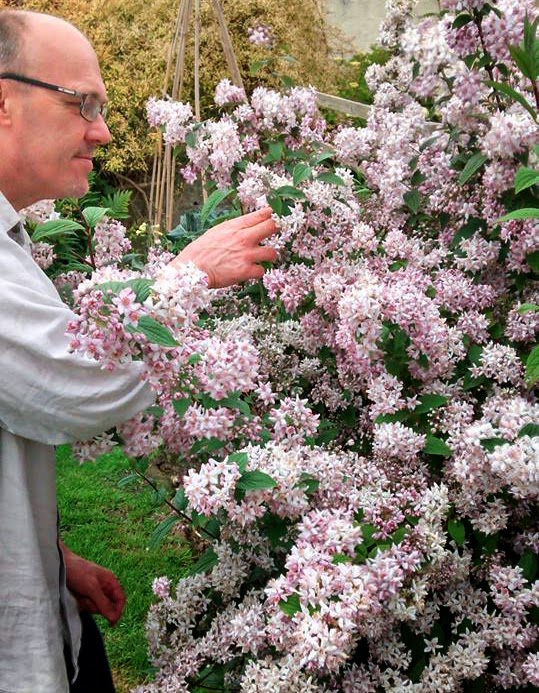
Having a good sniff of the early flowering Deutzia X hybrida 'Mont Rose’

We have a lovely flowering Deutzia X hybrida 'Mont Rose’ shrub in the garden. It has a slightly aromatic scent and attracts load of bees. It’s a stunning, colourful start to our shrub collection year and it’s the first time I’ve seen it in flower. 

The reason for this is that I have been a bit enthusiastic with my pruning since moving into the house three years ago. I didn’t let the shrub grow as that it has a tendency to hang over the fence and go into the neighbour’s garden. I am also limited for space on the bed it grows in and leaving it untended means less room for vegetable’s to be planted. This year I decided just to let it grow and I am really pleased I did.  The blooms are amazing.  

So how can I make sure that the shrub flowers as well next year and why should we prune shrubs?

Why prune shrubs?
Shrubs create the structure in a garden so it's important to keep them in good condition with regular pruning.  Regular pruning, usually after flowering along with mulching and feeding will help the shrubs to look good. Regular pruning will also help to keep the shrub in its allocated space and not take over the garden.

How and where to cut
Use sharp tools and make clean cuts without leaving snags. Cut close to buds, but not into them, and always above which will stop rotting.

Pruning young shrubs
  • Early pruning helps establish a shapely shrub with vigorous, balanced growth.
  • Most evergreen shrubs do not need thinning or formative pruning. However all shrubs benefit from shortening any excessively long shoots and cutting out weak or damaged growth.
  • Deciduous shrubs are more likely to need pruning into shape; this is known as ‘formative pruning’. Young shrubs often grow lots of shoots so you will have to thin them early on.
  • ‘Correct lopsided growth by lightly pruning longer shoots and hard pruning weak stems.
Rejuvenating old shrubs
Shrubs such as forsythia and buddlea can soon accumulate masses of old, dead wood in the centre if they are not pruned regularly. The best way to rejuvenate these plants is to cut them back during the dormant season. First cut out dead, diseased and crossing stems, and then thin the number of remaining stems by half.

Shrubs that respond to severe pruning, such as ribes, philadelphus and my Deutzia specimen may be cut almost to ground level to re-establish a framework of new shoots. If the shrub is old and it's hard to predict a successful revival, take cuttings just in case.

Pruning shrubs in pots
A lot of us have shrubs in pots. Once a container shrub reaches maturity it is usually best repotted annually in spring, or every other year, using the same or similar sized container. If you find the plant is very pot-bound, this is a good time to lightly prune the roots. Prune about one-third of the thicker non-fibrous roots back to the intact rootball, but avoid damaging the fibrous feeder roots. Repot in fresh compost and finish by pruning the top growth by about one-third to balance the root loss.

Coppicing and pollarding shrubs
Shrubs grown for their colourful stems or foliage, such as dogwood, need to be cut down every spring to 4-5 buds to encourage new growth. This is known as coppicing. If you want to keep a framework of older stems, cut down one-third of the stems.

A similar technique is called ‘pollarding’ where stems are cut back to the same point a single stem or framework of stems. After pruning, feed and mulch the plant.

Pruning shrubs in autumn
After a summer's vigorous growth, it is a good idea to give your shrubs a light prune in the autumn to keep them in shape. Once deciduous shrubs lose their leaves, it is easy to see the plants' overall shape and decide what needs to be cut back.

Pruning my Deutzia
In a week or so the flowers will have gone. It will be then that I can cut the shrub back and cut out the old flowering stems. I have some mulch to go around the base to help feed and keep in the moisture.
As the shrub will be contained and reduced dramatically in size, I will be able to plant annual vegetable crops around and underneath it, so it’s a win –win situation. I didn’t get one complaint from the neighbour either.

Thursday, June 5, 2014

Employing a Gardener


It’s been a busy few weeks here. Mainly because of my in-laws needing a bit of care. My mother in law was doing a spot of weeding in her front driveway when her husband accidentally ran over her toes as he reversed the car. This was painful enough but the shock of having her pinkies squashed caused her to turn around sharply to get out of the way, which in turn broke her leg. 

It gets worse. With her leg in plaster up to her thigh she needs to be moved around in a wheelchair. The chair was in the hallway and my father in law (like he did every evening for 50 years) made his way to bed by walking up the usually uncluttered hall. He fell over the chair resulting in a dislocated and broken shoulder. 

The main reason I mention this is that they are both avid gardeners and love to be active and as both are in their mid to late 80’s it’s certainly keeping them sprightly. They will both be laid up for 3 months at least which is right through the main growing season. To help them get through this I have sown a few veggies, but for a more reliable maintenance service we have brought in a gardener who was recommended by a neighbour and has worked for my in-laws on and off for years.

Reliability
There is a lot of grass to keep on top of and because I couldn’t offer any sort of reliability cutting it once a week we thought it would be a good idea to have him around regularly so nothing gets too out of hand. I think reliability is important when finding someone to tend the garden- weather permitting of course. There comes a time when most of us need gardening services for one reason or another, but why employ a gardener and how do we find them?

Why employ a professional gardener?
If your garden has got out of hand or like my in-laws you just can’t get out and keep on top of things then it’s probably time to get in the professionals. A professional gardener is someone who not only makes their living from supplying gardening services but is also fully insured, experienced, up to date with laws, has good tools and is aware of safety procedures especially if they have people working for them – and has an attention to detail and tidy.

Specialists
As with any profession gardening is skilled work and you might need to employ a specialist in one aspect of the garden like a tree care expert, it’s not very often you can find someone who can tackle everything in the garden.
Finding someone who works from their car with cheap tools and no means of removing rubbish isn’t a wise move as it might cost more to clean up after them than hiring a fully insured professional. It will be less stressful in the long run.

Finding a Gardener?
When I first started gardening I put a hand drawn advert into a local shop window. Because the poster was well made I got a good response from it. There are loads of other places to find tradespeople; here are just a few suggestions

  • Personal recommendation from family, friends or local business owners
  • Observing a gardener working in your local area and contacting them
  • Keeping an attractive flyer that was posted through your door
  • Looking through the Golden pages
  • Ask local businesses for recommendations
  • Perusing adverts in local papers, directories and parish magazines
  • Going online and typing in local keywords

Gardening is a messy business and so people working in this profession can be dirty especially at the end of a long rainy day. Despite this you can usually get a valid impression of the way they run their business just by looking and talking to them. Appropriate work clothes can portray a good image.
Talking to prospective gardeners is a reliable way of helping you come to a decision on whether to hire them or not. Things we would be looking for are friendliness, politeness, confidence, willingness to converse and interest in their chosen profession. Keeping things local helps the local economy, is good for the environment and keeps costs down.

How much will it cost?
According to whatprice.co.uk gardeners will charge anywhere from €15 to €35 an hour depending on their level of qualification, and what the job involves. However larger gardens, more demanding tasks and specialist skilled work could cost more.

Thursday, May 22, 2014

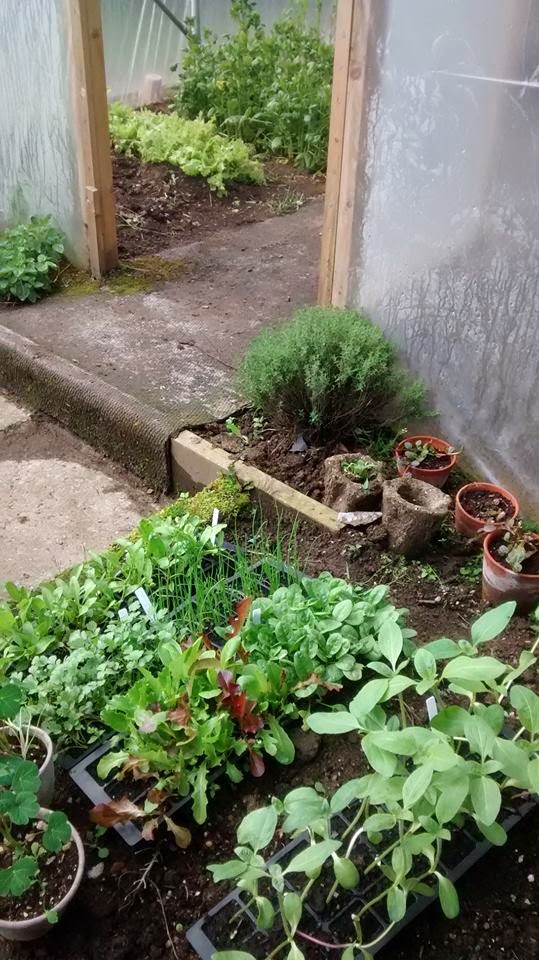
The Tunnel is Overflowing


The polythene tunnel is overflowing, so much so that I have had to put a lot of trays outside. I’m not complaining of course as it’s a sure sign that everything is at full speed growing and germinating. The multi cell trays I have outside have mostly small plants that will be ready to plant into the vegetable patch as soon as I am confident there will be no more frosts, (apparently we don’t get frosts after the 8th of May according to the bloke who owned Ness Nursery). 

The runner beans especially are large enough and are rooting into the ground almost immediately wherever I put them. I have all of the bamboo structures in place so it won’t be any bother to get them out of the confines of the cells and into the ground. (Job to do number 200 in the garden) I need to just go over the soil where the other plugs are going to be planted; I’m not too fussy about weeds in the garden as long as the vegetables get a head start to cut down on the competition for nutrients in the soil.

I have new spinach and lettuce coming along in trays. I have some of these growing in the tunnel, along with peas and chard from last year and they have been great at supplying me with fresh greens to put into my blender in the mornings. There needn’t be any time in the year when the tunnel isn’t producing something to make into a blended drink, but the plants are starting to go to seed so I have cleared half of them to make way for fresh summer stock. I thought I might as well collect some of the seeds myself and plant them later in the year for another winter crop. I also have left one land cress plant in as I quite liked those blended too and I have self-set rocket but that’s a bit strong for the blender. The chard will probably all go as I have new plants coming along in the garden, they are from the same batch as the tunnel ones but because they have had to endure the rigours of winter out of doors they show no sign of going to seed just yet like the tunnel grown ones do.

I’ve added a lot of garden compost to the soil in the tunnel. It’s full of worms and a bit smelly but it’s needed to keep the nutrients up for the next batch of plants. I am finding bits of plastic bags, bread bag ties and other non-compostable things as I add the compost. I think this is an indication of putting things in the compost bin in bad weather and not looking or it could be a sign of not concentrating on what I am doing when I’m in the kitchen. 

This is probably the reason we find car keys in the fridge and shoes in the oven, everyone does that …right?

Self Set
I found a lot of self-set tomatoes in the patch where the spinach grew.  When the tomatoes finished in winter I just dug the soil and any dropped fruit was just covered over. For once my untidiness paid off as lots of new plants have emerged. I am growing a few on, but not many though as we weren’t that fussed about the variety we grew last year. I have some of Klaus’s ‘Sweet Aperitif’ type so they will be my main crop this year. Still it’s nice to get some freebies.
My trays of 60 cacti and succulents have been transferred from the windowsill in the porch and into the tunnel.  Overwintering them in the house paid dividends as they are, or were, looking very healthy. Since they have been in the tunnel their appearance has gone downhill a bit as the leaves are discolouring and some are looking a bit shabby. I should be pleased though as this is what the plants would look like if they were growing in the wild and not in a controlled environment. It’s like reverting them back to their original state. I was hoping to sell them on in garden centre quality but it looks like I’m stuck with them now. It’ll be a challenge finding somewhere in the house for them in winter as they will be in 60 individual pots by then!

Chamomile
My chamomile lawn plants came this week, bare rooted in a plastic bag. They looked great as I planted them into individual pots but are needed a bit of TLC to rejuvenate them so I have them under plastic in the tunnel for a week or two. I’m not sure what to do with them yet, maybe I’ll make a lawn.  I’ll add it to the list of jobs to do in the garden (number 276)

Saturday, May 17, 2014

Moss on Lawns


I was looking on Facebook today and saw people are posting images of neighbour’s gardens who have big lawns. The grass is in good condition, but their criticisms are coming from the fact that people STILL have lawns and not converted them to gardens that don’t need water. In fact opinions are so strong it’s like a lynch mob and even councils in America are offering rate rebates for people who ditch the sprinklers in favour of plants that are drought tolerant. I think we are safe for a while yet until people turn their noses up at our lawns –as long as it rains. 

The other comments are that lawns take up a lot of herbicide to keep it looking weed free and healthy. This need not be the case and although I have mentioned before that more veggie patches are needed, I still see the need for grass areas especially if you have children, dogs of have a disability where you just rely on the grass being low maintenance. I’m coming out in defence of lawns! Who would have thought it? I suppose it’s because I don’t like being told what to do.

Moss in the Lawn
It’s not all plain sailing with lawns though as we do tend to have an issue prevalent in Inishowen which requires a bit of work every year. Hands up who has a lawn that doesn’t have moss in it?.... No hands? I thought not.
Moss on lawns could be an indication of waterlogging. On new lawns this may be due to poor site preparation. On established lawns poor vigour, acidic soil conditions, a lack of feed, insufficient aeration, poor drainage, shade, close mowing and over-use are likely to blame. So it could be anything really.

Nowhere is safe
And don’t think pretend grass is exempt either, imitation grass can also get things growing on it, nothing is safe. There are different mosses depending on where they are growing. Several types of moss grow on lawns. These are usually coarse, loose, green or yellowish-green tufts between the grass, but can form densely matted tufts or, in the case of Polystichum, appear like small forests of miniature Christmas trees.

Poor growing conditions favour the growth of moss in lawns. These might include:
  • Sparse grass cover
  • Worn areas of turf, especially along walkways and where children play
  • Shady areas, especially beneath trees
  • Compacted soil
  • Wet weather and waterlogged conditions
  • Drought-stressed grass
  • Mowing too close
  • Impoverished lawns or infertile soil
  • Poorly prepared or poorly maintained lawns
  • Acidic soil conditions

Non-chemical control
To keep the lawn critics happy we can work naturally with the ground to improve things. 

Scarification: Remove loose moss in autumn, by scarification (vigorous raking). On small lawns this can be done by hand, raking out the moss with a spring-tine rake, but on larger lawns mechanical scarifiers can be hired. 

I’m not going to mention chemical control, you are on your own with that I am afraid although having a dog helps to kill everything when they go to the loo. There are a few organic weed and feed products on the market which might save a bit of time and need to scarify, but these are not combatting the root cause of the problem. It might be worth checking them out though as a temporary measure.

Moss prevention
To prevent moss returning, encourage vigorous grass growth by organic feeding and regular lawn maintenance, paying particular attention to the following:

When seeding or laying a lawn in a shaded area, use a grass seed mix or turf specified for shady areas.  Reducing shade will also help.

For compacted areas use a garden fork to spike the lawn, or a mechanical slitter on large lawns. This will aerate the turf.

On heavy soils use a manual or mechanical  hollow-tiner in autumn to take out small plugs of soil every three or four years, and then brush in a mixture of three parts sandy loam, six parts sharp sand and one part peat substitute by volume

Avoid mowing grass too short

On very acid soils an application of garden lime at not more than 50g per sq m (1½oz per sq yd), will slightly reduce acidity and discourage moss.

More stories

Related Posts with Thumbnails